Sounds Like a Cult..

Since moving to Mexico in May, I have been asked fairly often “what the hell is wrong with your country?” and more frequently “why do people still support Trump?”

While I don’t really have much insight into the former, I have a lot of insight into the latter. The Trump die-hards are in a cult. How can I say so with such confidence? I used to be in one. and I see so many similarities between the cult of Trump and the cult of IFB.

An imperfect man…

I used to attend IFB services 3x a week for 18 years. One of the mainstays of our services were men talking about their lives before they “found God.” For example, our pastor used to be an alcoholic who beat his wife and kids. But he found God and through his grace he was forgiven. You would think that this story would be rare, but I have been to other churches and conferences, and you hear the same story over and over. Man was evil, Man finds God, Man is forgiven. Man doesn’t need to think about why he did the things he did, he doesn’t have to apologize for the things he did: man can simply accept God’s divine forgiveness and then proceed to hold a high position in the church. The women and children subjected to his terror? They now need to submit to him. And they do. Because if God can forgive the man then they can too, right?

Trump hides behind the same bullshit. He can say and do whatever he wants because no one knows his relationship with God. They know he has one and that’s all the counts. They have seen countless men who did evil deeds in the past come to Christ and be forgiven, why should Trump be different? You may say, “but Trump’s past and present actions are evil.” Unfortunately, I know all too well what level of evil is tolerated when the man is a “godly man.” Especially if he can convince his audience that he had to do horrible things to achieve a greater Christian purpose.

I think another important thing to note is that many non-evangelicals don’t tend to read the old testament much. A lot of focus is on the new testament and the words of Jesus. In evangelical churches, we love the old testament. There’s a reason the preachers used to be called “fire and brimstone” preachers. This version of God is very different from the son he sends later. This version of god is violent, angry, vindictive. This is the god of the evangelicals.

So when Trump talks about destroying cities, getting rid of “evil-doers” and creating a place for the righteous, he really doesn’t sound far off from the Old Testament god. When you bring up Trump’s past infidelities and abuse, evangelicals don’t bat an eye because God has forgiven him and blessed him. My old church believes in the prosperity doctrine and Trump plays right into that. For those who aren’t familiar, the prosperity doctrine says that if you are faithful to god, he will bless you (with money, success, or both being the implication). And wouldn’t you know it? Pastors live in large, beautiful houses because God blessed them (not the tithes of their congregation). Follow that logic with Trump and the message is: Trump is rich and successful, he is doing something right in the eyes of God.

Some people have been confused as to why Trump supporters support Israel but they themselves are antisemitic. It all comes back to evangelical beliefs. Evangelicals believe there are events prophesized in the bible that need to take place before the rapture. The rapture is essentially the end of the world and all “born again Christians” will meet Jesus in the sky and go to heaven with him. The last event that needs to happen for all rapture conditions to be met is the creation of Israel as a state. Evangelicals would absolutely lose their minds if Israel were to cease to exist because that means the rapture is not going to happen. However, if you were to ask evangelicals what they really think of Jewish people, most are extremely antisemitic. Evangelicals blame the Jewish people for the death of Christ. They will not support a Jewish person, only the state of Israel.

You may be thinking, “Okay but surely because of the Epstein files, they will finally realize he’s a pedophile.” Sorry to break it to you, but the evangelical church has already provided guidance for this. When I was little, like 5-7, I remember going to get my nails painted at the salon for the first time. I picked out a beautiful bright red color and I was told that little girls don’t wear red, it attracts men to them. Yes, you read that correctly. I was being told not to be a 5-7 year old slut by wearing red nail polish. That’s how early it is ingrained into your mind that women (and children) are responsible for the actions of men. Trump will never be held accountable because he is a man at the end of the day, the children will be to blame.

A significant portion of Trump’s supporters are evangelical. When you are evangelical you are told that the entire world is out to get you. So you isolate yourself from others, you arm yourself with information that will keep you safe from outside voices. I believe MAGA is acting no differently. Evangelicals truly believe that the United States is a Christian nation and that it should be run like their churches are run. What does that look like? White men in power with only God to hold them accountable. Women and children are considered too feebleminded to be included in decisions. The cult of evangelism and the cult of Trump really are not different. It is the same unequivocal devotion in the face of facts, the same misogyny.

A cult within a cult.
An Omnivore’s Dilemma

“You’re eating meat?? I thought you were vegetarian.”

Next month will be my fifth year as a practicing vegetarian. If I could transport back in time and tell my 19-year-old self that I have been vegetarian for this long, I would laugh in my own face.

Back then I subsisted on a diet of bread, meat, and cheese. I remember teasing my roommate in college about being vegetarian and reveled in calling her out on the occasion she would “slip up” and eat some meat. I threw a fit when I would have to go to a vegetarian restaurant because there was “nothing” for me to eat. I was (and am) a picky eater and vegetables really didn’t appeal to me back then.

Fast-forward to 2017 when I read about how bad meat consumption is for the environment. I knew it was bad, but I didn’t realize how bad. To be honest, I felt like it was something with impact that I could do and I could maybe even lose weight in the process at least, that was my full motivation at the time.

Changing this one aspect of my life was very hard at first. I had to figure out how I was going to make this lifestyle change stick and learn how to cook for myself (a much-needed lesson). Still, sometimes we would show up at a restaurant with friends and there would not be a vegetarian option. Was I supposed to just not eat in those circumstances? If my husband has leftover food on his plate from dinner, am I allowed to eat it if it has meat? What are the rules here?

I was still working events at this time and we would work events where there would be an excess of food leftover. I decided I would eat the leftover meatballs, salmon, etc. because I couldn’t stand watching them be thrown away. One day, a coworker said, “You’re eating meat?? I thought you were vegetarian.” It was one of those amazing moments of irony and clarity.

To piggyback off my questions from earlier, if a person eats meat less than a certain amount of times in a year, are they vegetarian? If a person eats meat because they respect the animal sacrifice too much to waste it, are they vegetarian?

Maybe you would say they were flexitarian. I have considered identifying as a flexitarian, but in my experience, that often means people assume you can “suck it up and eat meat.” I am not writing this to say everyone is a jerk for calling people out for these “slip-ups” (I mean I used to do it all the time) but it has never made me laugh or feel good.

At the end of the day, most people eating vegetarian or vegan are going against a very difficult cultural norm and are doing it for a higher cause than themselves. It is especially hard starting out and failing, especially if people think that being vegetarian and vegan means never slipping up or never eating those products. Most of us are just doing our best.

I didn’t start out on a vegetarian diet because of animal cruelty, but once I stopped eating animals and distanced myself from “meat culture,” it deeply disturbed me. I cannot bring myself to benefit from animal sacrifice when I know that I can eat without that horrific component.

Next time you want to call out your “cheating” vegetarian/vegan friend, give them the benefit of the doubt instead. Think about how you can make things easy for your vegetarian/vegan coworkers when you’re planning events by looking ahead at menus or providing a vegan option. I promise we’re not trying to convert you, we are just trying our best in a meat-centric culture.


A Weight on My Mind

EDIT (5/22/24):

It feels important to state that I am in denial for a lot of the post below. I didn’t want to say that I had an eating disorder or that I was starving myself trying to eat 1200 calories or less, obsessively taking photos of my body to compare to older photos. I didn’t want to see or share those parts about me then, but it doesn’t feel authentic to hide them from the reader or from myself now.

At the end of this post, I say that I am finally liking the body I have. Of course, I didn’t mention that I wrote this article during one of the times in my life when my weight was lowest. Separating my personal worth from beauty and thinness has been something I have worked really hard on and continue to struggle with. In the last few years, it has also been noted that weight does not equal health.

I think about what this means in the context of my mother. She had a life-altering injury in 2003 that left her unable to work. She could barely walk, she was in so much pain. She was given many medications to treat her injury and the comorbidities that came with the injury. Some of these medications had really bad side effects, including weight gain. So my mom proceeded to gain weight from not being able to exercise due to her injury and from the side effects of the new pills. If people had seen her walking around back in 2005, it may have crossed someone’s mind that she was lazy or unable to feed herself stuff that wasn’t junk.

What they couldn’t see was the compounding of multiple medications with weight gain side effects. They did not know about the injury that made her feet feel like pins were stabbing into her each time she took a step. She couldn’t work out

As it goes with fat people, they get vilified or infantilized. People say things like “They are so disgusting and lazy, that’s why they can’t lose weight” or “Did you see Carol eat that piece of cake, no wonder she’s fat.”

___________________________________________________________________

I wish my grandma loved her body.

Her body, which has given life, and warmth, and love.

Her legs have carried and kept her sturdy for 80 years, but she wishes they were thinner. Still.

Her belly jiggles and bounces with delight when she hears a good joke, but she wishes her belly was smaller. Though perfect for holding and nurturing her children, her stomach has always been viewed as a traitor, an enemy. Someone she must contend with when she looks in the mirror.

My mother inherited her body shame.

No matter how much weight she loses, she is unsatisfied. It is never enough.

I began thinking about weight at an early age. We always had a scale in our bathroom and Weight Watchers literature readily available. My mom’s friends were also all dieting, though interestingly, I never saw any men be concerned about their weight.

I was a picky eater and tall, so it took me longer to grow into my body. I was called skinny-mini and Olive Oil A LOT as a kid, I didn’t think anything of it until it stopped. I remember girls in the locker room in 7th grade inspecting their bodies in the mirror and joking that they wished they had the commitment to starve themselves or to be bulimic. We’d all nod and agree, it would just be SO amazing to be smaller than we were at 12. I was also 12 when I had my first slim-fast shake.

When I joined track in the 8th grade, I began to put on weight. I would be told, lovingly, to watch the amount of bread/food/whatever I was eating, because I didn’t want to end up like my mom and grandma. Growing up, it never felt like an option for me to love food. Food was always an enemy that would one day betray me. If it’s SO good, then it’s really SO bad, and I better watch how much I eat and properly mourn my physique later.

Health was never emphasized, it always came secondary to weight. Count calories, eat less, eat only fruit, drink weight-loss smoothies. I think the emphasis on restricting food is partly due to our financial circumstances. Wealthy people that want to diet will eat healthy food, and work out: poor people starve themselves and drink slim-fast. The number of times I heard “Oh, you’re on Adderall? You’re so lucky you don’t have an appetite” from older women was appalling in retrospect.

Perhaps unsurprisingly, I developed a very unhealthy relationship with food. This came to a head after I gained 15 lbs in college. I gained 10 more after my sexual assault. I decided I wanted to lose weight. From then on, every food had a calorie amount attached to it.

You may not know this, but it is common for people with ADHD to struggle with binge-eating. I had always struggled a bit with impulse control and binge eating before college, but it came out in full force during college. I would spend the day actively avoiding food or being too focused to eat and then break down and binge at night, feel sick and ashamed of myself, rinse, repeat.

It was like I was back in 7th grade again. If only I had the commitment to be skinny. That’s all it really is, right? Willpower, grit, and maybe laxatives were all that stood between me and the perfect body. 145 lbs. That was my weight my senior year of high school, and up until recently, had been my target weight. I failed to see the irony of going back to a weight I had felt ashamed of at the time. I spent 10 years chasing this fantasy, disliking myself no matter what the number on the scale said.

Why did this number matter? Why was it my obsession? I weighed myself almost weekly, I took progress photos in my mirror for years. I continued to feel shame and hate my body anyway. I disliked being in a bathing suit, being in photos, all reminders that my body fell short of my expectations.

I remember my mom avoiding being in photos when she was heavier. I hardly have any of her from my middle school years or high school years. When I get my picture taken, the first thing I do is look for all the ways I can hate my body.

I don’t really have advice on how to love yourself more because I am still trying to figure out how to do that. During the pandemic, I stopped wearing makeup. This made me realize how much shame I carried about my own face. I noticed that not wearing make-up before the pandemic produced the same anxiety and shame that I felt with my body. I didn’t love myself when I looked in the mirror unless there was eyeliner and mascara involved.

I have started a new relationship with my body, and we like each other most days. I have stopped abusing myself with starvation tactics, binging, guilt, and self-hate. I am choosing to make peace with this body and while I may not love it right now,

I do like it.

Nothing to Fear but Fear Itself?

Ever since I can remember, I have been afraid.

When I was little, it was the simple things, afraid of the dark (who am I kidding, still am), afraid of snakes in the toilet, afraid of a monster being under my bed, afraid of the eternal damnation of my soul, and my relative’s souls.

You know, normal stuff.

When I used to go to church, I was told to fear the world and to fear people that were not part of the church. I was told to fear Harry Potter. I was told to fear people of different faiths. I was told to fear queer people (AKA myself). I was told to fear the end of the world.

When I grew up and left the church, I still indulged in fear. I feared being raped. I feared being gay. And wouldn’t you know, those things came true.

I develop PTSD as a result of my assault. Just when I thought I couldn’t be more afraid of the world, I somehow unlocked a new level.

I became afraid of men. I became afraid and sensitive to loud noises. I feared being home alone because hearing the cats move around made me nervous that someone was in the house with me. I lived my entire life just operating on survival mode. Every time a fear diminished, a new fear would emerge to take its place.

I felt so small and afraid.

Then the pandemic happened. A million fears flickering across my brain like ticker tape scrolling at all hours of the day. I lost my job and just like that, another worst fear comes true. You might think at this point, I would lie down or scream or spiral further.

Surprisingly, I did none of those things.

Instead, I gave up on being afraid. I know that may sound odd, but it’s the best way I can describe it. I realized I was just tired of it. It was exhausting carrying this fear with me all the time, it was like a heavy burden I had never learned to set down. I began writing this blog and confronting my fears and hopes head-on.

I decided to take a two-month road trip across the country, by myself. The top question I was asked, over and over, was “aren’t you afraid?” I would smile and respond, “No, I’m excited!” The old me would never have done what I was able to do in those two months. She would have stayed home afraid. That would have been a shame.

I met so many friendly, kind, nice people on my trip. I was invited to dine with strangers, told about hidden treasures by locals, rescued from the mud by a couple with shovels. I hiked up a mountain with a nurse that had seen the worst of the pandemic and was given water by strangers on the way down when I had run out. I met two people that made sure I had the safest route home and walked me to my car because it was dark.

As a child of a single mom, I have always felt taken care of by those around me. I have seen these adults in my life as extended family. This felt like an extension of that.

The world I was taught to fear my whole life turned out not to be so evil after all.

I think the world is what you make it. It is not wholly evil and it is not wholly good. If you believe in the good intentions of others and open yourselves to them, you will be surprised at what comes your way.

If you choose to live in fear, you will walk through this world constantly seeking validation for that belief. You will close yourself off to wonderful experiences because you will be too focused on the harm that could come to you.

My worst fears came true and I am still here. I survived and I know I can survive. I don’t want to sacrifice my joy at the altar of fear anymore.

Loving Lido

I didn’t grow up with dogs. In fact, I used to dislike their unpredictable nature and energy, I used to view dogs as “needier cats that go outside.” So I devoted my attention to cats, fish, snakes, mice, basically any other animal.

So it came as a surprise to my friends and family in March of this year when I told them I was planning to adopt a dog.

This decision did not come out of nowhere; I got a dog for a lot of the same reasons many people got a dog during the pandemic, I wanted a companion and at the time, what I had instead was a cat that liked to be looked at and ignored, and a snake that shared those same sentiments.

When I got laid off from my job in June of 2020, I really didn’t know what to do with myself. It was depressing and seemingly futile applying for jobs and I hated being inside all day with nothing to do. One day I decided to start walking.

When I started out, I was proud when I did two miles, that was the most I could do before my feet hurt. I got better shoes. I hit three miles. I got better socks. 4 miles. I started going on walks twice a day. 5 miles. I got inserts. 6 miles. Became an audiobook addict. 7 miles.

I was hooked on walking. Nick and I started walking together in the evenings and listening to audiobooks, but it wasn’t consistent. I started wishing I could share these walks with someone or something other than myself. I bought a cat harness for Buddy, but when he flattened himself on the ground with pure terror in his eyes, I knew I had to give up that pipedream.

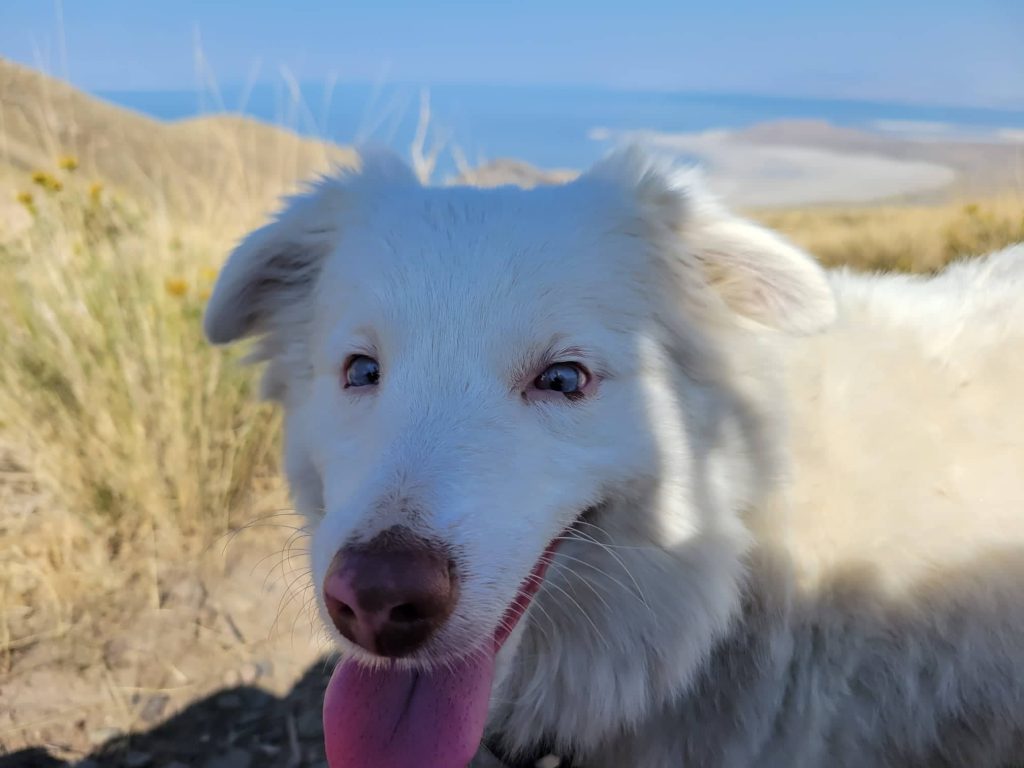
I started talking to Nick about getting a dog; he was hesitant because he also didn’t grow up with dogs. I began looking at dogs privately. I broach the subject with Nick again, he concedes!! I tell him I would like to adopt a special needs dog since we have the means to take care of it (at this point I am thinking heartworm positive or something “easy”). He agrees. We see the posting for a 9 year old deaf and blind australian sheperd mini and it’s only an hour away. We hop in the car and off we go to meet this little white poof!

When we first meet Lido he is laying on the grass with his legs spread out, he seems to be smiling. We walk him around and he rests in multiple shady spots and is low energy. We think we are giving him a nice retirement/hospice situation.

Oh did he have us fooled.

The first three days with Lido were an intense blur. He walked me ten miles every day for the first three days. I began feeling sick, I was worried I had Covid, turns out, I had a severe dog allergy. I start taking allergy meds.

Our first month with Lido (as with most dogs from the shelter) was incredibly difficult, his behavior was confusing, and we didn’t know how to deal with his disabilities. We could find material on deaf dogs and blind dogs but very little on blind AND deaf dogs. He barked at everything and everyone. He would bark, sometimes bite, if we left him alone or walked away from him. He refused to be crated. He would defecate when we left the house, when I showered, when we slept, seemingly whenever. He would bite if I came near his food or near him with his food. He would jump whenever he was touched because it would startle him. He would bite me when I put him in the car or tried to take him out of the car. He refused to defecate in our yard. The list goes on.

I was in over my head in so many ways. I had no idea his issues would be so severe at times and it was incredibly difficult navigating how to train him. How do you tell a partially blind and deaf dog “no,” ask it to go out, or reassure it?

It felt like I was living with an abusive partner. I never knew which side of Lido I was going to get and it started to put a strain on Nick and I’s relationship because we were both confused and miserable. People would excitedly ask us how things were going and as much as I had bonded with Lido, it was hard to joyfully discuss him with others. When people would tell us how much they loved Lido we would always half-joke that they could have him. He got kicked out of dog daycare and I cried on my way home with him in the back seat. I started to wonder if I should take him back to the shelter, the very thought of doing that made me cry harder. I have never believed in “returning” or “giving up” on animals, and it felt like the ultimate betrayal to take Lido back.

When we adopted Lido, we were told he just needed to be taken to behavioral classes to work out a few minor issues. These “minor issues” were leaving me bruised and frustrated and the behavioral classes willing to accept a dog with such intense special needs did not exist. I was told that I would need a specialist and that he would probably never do tricks or be able to go to a restaurant so I should set my expectations low. Out of the 12 places I contacted about helping Nick and I navigate this dog, only one person agreed to take us on. She was an angel named Keri.

Keri was able to figure Lido out like no one else. She worked with us to find a way to communicate with Lido. It was also through Keri that we discovered a very important and critical detail about Lido, he’s smelling impaired!! This discovery was like the one missing piece of the puzzle with Lido. Everything that confused and frightened us about Lido made sense. He would bite us sometimes because he didn’t know who we were, now we know to always let him smell first.

It’s been six months since we adopted Lido.

He still walks A LOT, he walks me 4-6 miles a day. He can do two tricks so far. His behavioral issues are almost completely gone. We eat at restaurants a lot and there isn’t a person or dog that he doesn’t want to meet.

He and I are traveling crosscountry right now and he is the best companion I could have ever dreamed of. He is always willing to go on an adventure, whether it be a rock scramble, climbing up a mountain, or kayaking in lake. He just needed someone to give him a chance to do those things and to be that dog. Keri once said that he is the bravest dog she has ever known, and I have to agree. His bravery has been inspirational to me in so many ways. He reminds me that the unknown isn’t always so scary and neither is trying new things. In fact, he inspired me to take this trip!

When I began walking last year, I didn’t realize I was working my way up to being able to be the owner of Lido. Training him and watching him grow has been one of the biggest highlights of my year. He continues to amaze me and as I lay here with his head on my lap, I cannot imagine my life without him.

Attention Deficit Disorder? I Hardly Knew Her

I want to talk about growing up with ADHD and what it has been like to have been diagnosed so early.

I saw the doctor about ADHD for the first time in 6th grade.

It all started small. I would lose things easily and often, but what kid doesn’t? Things escalated when I transitioned to middle school. I was having panic attacks daily and I was so sick on my stomach throughout the day that I was making myself sick. Not about making friends or middle school crushes, but about being able to retrieve all of my supplies from my locker between periods and get to class on time. Each day at school, I was missing something important for class and each day I would find myself unable to breathe in class or go home crying and in fear that I would be punished academically or embarrassed at school.

On the fourth day of school, when I started crying before even getting on the bus, my mom decided to take me to the psychologist. My brother was diagnosed with ADHD when he was young, so she decided to make an appointment with his doctor to see if I had it as well.

That diagnosis probably changed my life more than almost any other event in my life. I was home schooled my sixth grade year because of the increasing stress I felt with going to school and because we moved counties during the school year. This allowed me to adjust to medication outside of what I considered to be a high-pressure environment. My mom tried her best to help me be less forgetful, she would make charts that I would forget to fill out and notes I would forget to read. She tried to put me on a schedule that would ideally help me, but I found it impossible to keep it consistent.

I finally returned to school in 7th grade and things were normal, until my doctor heard about Adderall and thought that I might be a great fit for it. I tried it and it was extremely helpful. I could finally remember things, my brain stopped feeling “cloudy,” I stopped being tired all the time. I excelled in school and stopped having panic attacks. I took it for granted.

My life changed in 2011 on my 19th birthday. My mom has been on disability since 2002, turning 19 meant that I was no longer covered by health insurance. I was unable to afford my medication as it was close to $300 without insurance and I was a college student paying for my own rent and food.

My grades suffered but so did my entire identity. Can you imagine building your entire life and identity around an mind-altering substance from 13-19 and then having that taken away over night for no real reason? I sunk into a deep depression, feeling stupid and confused about why. I lost something like 10 house keys and multiple debit cards my 19th year because I could not keep it together (my mind or my belongings). I did not know how to cope with my disorder outside of medicine.

I want to stop here and say that the institutions that were supposed to serve me, failed me. Medically, no one, in the 7 years I was seeing a psychologist and taking Adderall told me anything about my disorder. What caused it, how I could cope with it long-term, what other areas in my life could have been impacted by it (hello clumsiness, poor impulse control, sensory hypersensitivities, eating and emotional dysregulation, and central audio processing disorder!).

It took losing my insurance and then finding out about an ADHD study at VCU for me to finally learn about my disorder and be given skills to cope with it outside of medicine. It felt like I was learning how to be myself all over again, how to put myself back together and keep myself together. The most incredible thing happened when I found out certain traits I had always considered to be personal shortcomings, were actually linked to my disorder. I began to understand and go easier on myself.

Shortly after starting my job, I began to feel like I did in middle school. I left my phone or lunch at home on a weekly basis, I would mess up basic tasks like filling folders with the correct amount of materials in the correct order, bringing materials to meetings, or with remembering where my nametag was (I had them order me an extra so I could not worry about crying about my nametag). So I went to the psych and got back on ADHD medicine for the first time in nearly 10 years. .

I am not on Adderall anymore and I don’t think it’s the right medication for me, but my current one isn’t either unfortunately.

I am about to navigate this process again and I am afraid. It’s hard when the line between disorder and treatment and self are all blurred. I am not sure which parts of me are organically ME. I don’t know what’s fixable, or what parts of me I will lose in order to be able to function normally. I just want to be honest about my experience because I am still trying to understand it and still navigating it. Despite popular belief, ADHD isn’t something you grow out of and it’s not something that those of us who suffer with it often get to talk about.

If you know someone with ADHD, give them a hug, they probably need one.

Keep On Rollin’

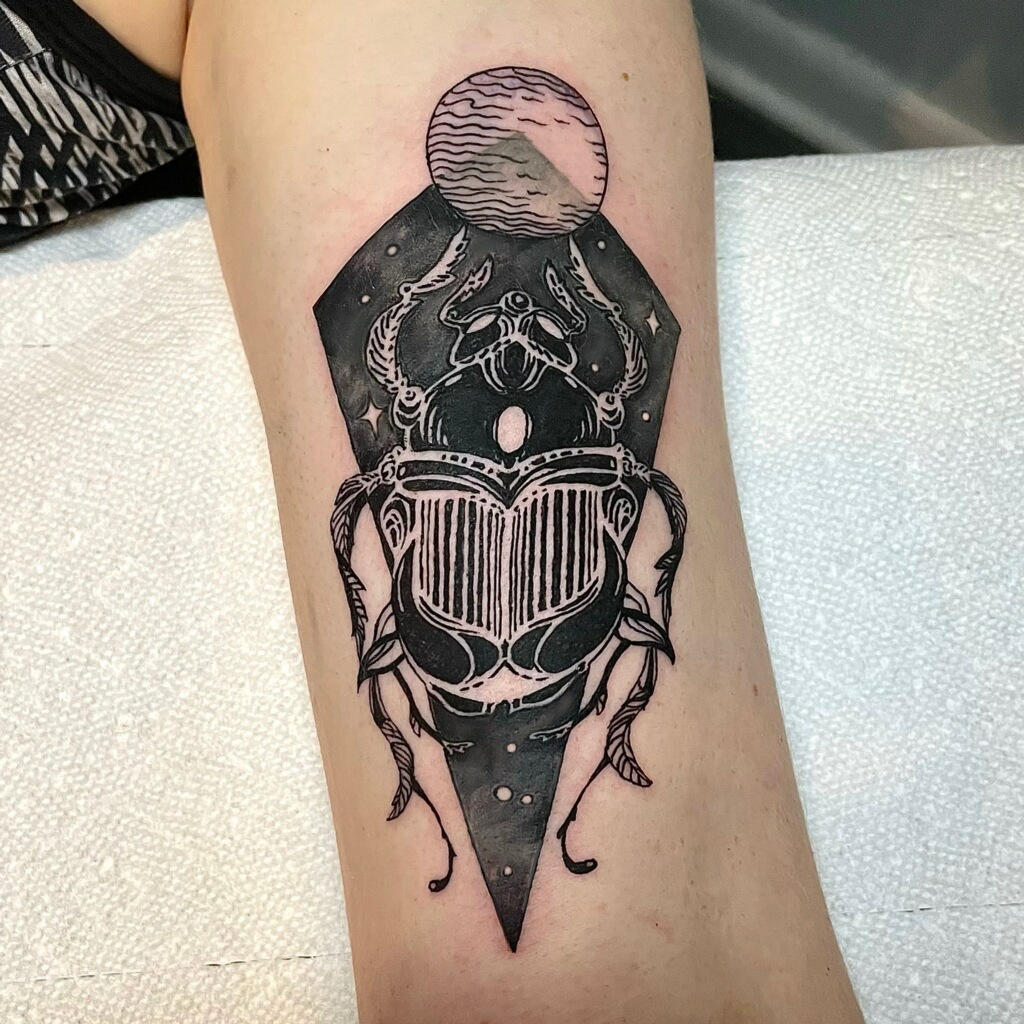
My gift to myself for my 29th Birthday was a tattoo of a dung beetle. 

I had intended this tattoo to be about so many things. I began 2020, literally on New Years Day, talking about the dung beetle. It is one of my favorite animals and it is sadly facing extinction. It is one of those animals that everyone on earth relies on, whether they know it or not. You may have recently found out how much you rely on the cute, fuzzy honeybees or those gorgeous butterflies for pollinators; but people rarely realize how intertangled they are with the dung beetle. 

This was my Environmental Science teacher’s crusade in high school; how people would bend over backwards to save pandas because they are cute, but won’t save the animals that hold the entire ecosystem on their backbone AKA the dung beetle.

Dung beetles are considered keystone species because of their role in decomposition, seed dispersal, and control of vertebrate parasites in grazed habitats. A keystone species plays a similar role in its ecosystem as a keystone plays in arch. The keystone is under the least pressure of any of the stones in an arch; however, if removed, the arch will collapse. Similarly, an ecosystem may experience a dramatic shift if a keystone species is removed, even if that species was a small part of the ecosystem by measures of biomass.

Dung beetles act as little dung rolling essential workers, aerating and mixing soil by burrowing, while increasing the organic matter content of the soil by burying dung. They create the all-important layer of topsoil that provides nutrients and enables our plants to grow. “In cattle pastures, they’ve been known to bury more than 80 percent of the dung pats. At the same time, they loosen and nourish the soil, improve its ability to hold water, prevent the plants under the cow pies from dying, and keep the fly population down, all of which keep pastures and cattle healthy and growing. They keep air pollution down, as well – researchers have found that some dung beetles reduce the methane emitted by cow pies by 40 percent.” (https://www.nature.org/en-us/about-us/where-we-work/latin-america/stories-in-latin-america/biodiversity-dung-beetle/)

Dung beetles serve as an eternal reminder to be good stewards of the earth and that waste to some may be considered vital to others. 

Some dung beetles choose to make a home in their dung, others choose to lay their eggs there. The ancient Egyptians considered them sacred because they believed they could reproduce asexually (turns out it was badass females laying the eggs, big surpriseeeee). 

They are often thought of in the context of duality, old and new, life and death. They (the living being) rolling balls of decay, in order to lay their eggs in them, and then die. You would think these little creatures must be pretty unintelligent because they roll dung for a living, BUT YOU WOULD BE WRONG. 

Just when you thought the dung beetle couldn’t be any cooler, it turns out they navigate using the Milky Way. Researchers in Sweden discovered dung beetles can record a mental image of the positions of the Sun, the Moon and the stars and use the snapshot to navigate. The beetles capture the picture of the sky while doing their classic “dance” on a ball of manure.

2020 was a shit year for everyone. We all lost something precious to us and had to adjust to a new normal. I want to honor and remember that with this dung beetle tattoo. Look for the parts of the shit to treasure, dance on it, and keep on rollin’.

sorry mom 😅

*Humanity would cease to exist without these incredible creatures and I am honored to wear one on my arm. Dung beetles are quickly disappearing because of the pharmaceuticals used on animals in factory farming environments. If you want to know how to save the dung beetle, stop eating meat! If you can’t commit to that, please buy your meat from a non-factory farm. These farms do so much harm beyond the horrific practices they put the animals through.*

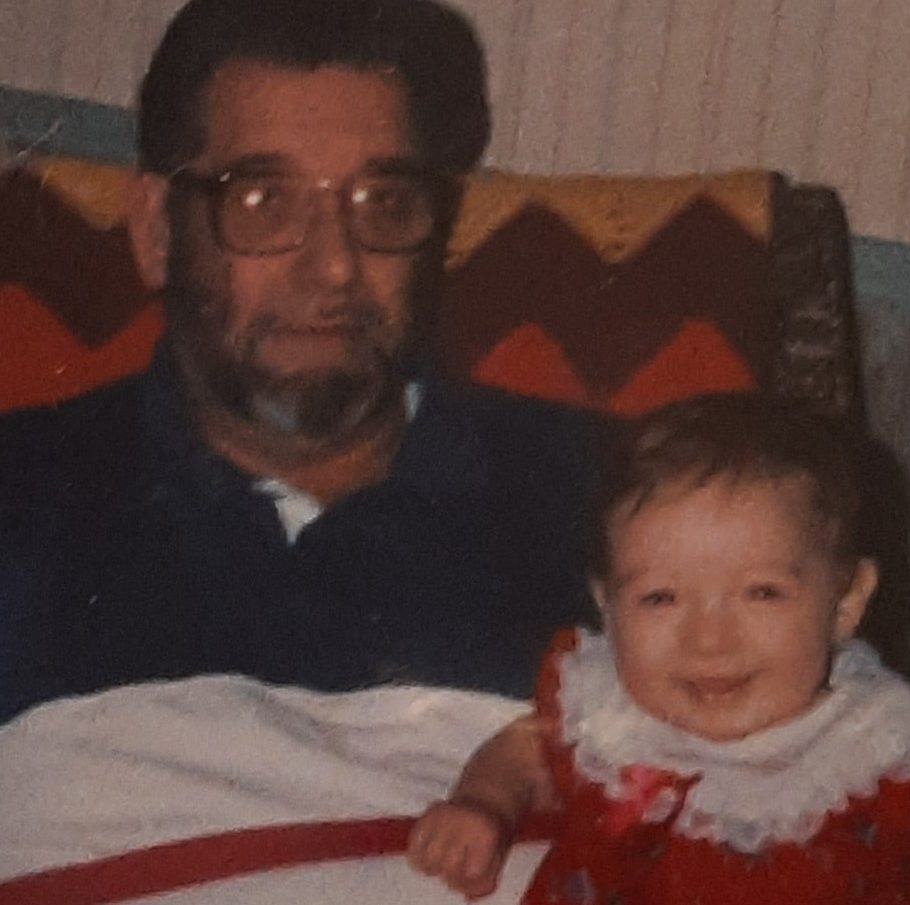
Grandpa

I just took another year around the sun. I remember last year, turning 28 in the pandemic and thinking to myself “what a boring year this will be! An age to forget!” 

I was wrong. 

I lost my grandfather 11 days before my 29th birthday. It was a bittersweet feeling. I was happy he was at peace and no longer confused. I walked outside and saw the seeds and fuzz of hundreds of dandelions, falling softly like snow. I was transfixed as I watched them float down in the most spectacular and graceful way I had ever seen. It was like stepping into a Miyazaki film.


They fell like that for 2 days. Just letting the breeze take them to the next place to rest. Resting after holding on to their roots for so long, when finally a strong force sent them gently gliding on the wind. 

I had visited my family 2 weeks before moving and we had a wonderful visit with just the two of us. I could tell he was tired and confused, but still alert. 

It was the first time I was able to see him safely before the pandemic and part of me knew that it would be the last time we would have a moment like the one we had between us that time. 

I remember talking to him about something and then he asked me how I was doing and what I was up to; we talked about the books I was reading and how much I loved to learn. How much I had learned in my 28th year and how I couldn’t get enough. He told me that was the best thing in the world, that I loved to learn. 

My grandfather was a teacher and an architect. He always made me believe I could do anything. He let me join him in his workshop and helped me design pencil holders and all sorts of wood projects. He took me fishing and camping. I watched him build so many things that I took his strong hands for granted. 

When he was diagnosed with dementia, no one could really believe it. This was a man that got part of his colon out and didn’t use a single painkiller after surgery. This was a man who cut off half his palm with a saw and had it sewed back on. He should be immune to things like dementia; but we are all mortal in the end.

I plan to honor my grandfather in a variety of ways. I will continue to learn and to love learning. I will continue to find joy in a job well done. I will uplift those around me. I will love patiently and earnestly. I will endeavor to be as selfless as the wonderful man that we loved and we lost. 

I love you Jesse Alexander and I am so thankful you chose to be my grandpa.

Being Mortal

I have always had a weird relationship with death.

My mom worked at a nursing home as a nurse, and one of my favorite childhood activities was visiting work with her after school. I would roam the halls of the nursing home, getting cookies from Mrs. Alley, playing in Clara’s room, or sitting with Blanche while she caressed her baby doll. Death and frailty were constant in the nursing home. I would show up to find Roxy, the spunky 103 year old, had decided to up and leave this world. Then Clara left, then Blanche. It never occurred to me to be sad or to think about where they went. They simply weren’t there anymore and new elderly people came to take their place. I never gave it much more thought.

The only other place I heard about death was church.

In my church, death was discussed in terms of fear.
“People you know and love that aren’t saved will die and go to hell, no matter how good they are.”

This particular idea, when I first learned of it, caused me to cry and plead with my mom to write to all our relatives to beg them to be saved by Christ. I anxiously thought about my school friends, my neighbors, all doomed to be tortured in hell. I began to worry about my own salvation and being left behind by my own family. These were the thoughts that plagued my 10 year old brain.

When I got to high school that changed. I began to fear being old more than being dead. I even began glamorizing dying young after listening to Time to Pretend by MGMT. I smoked Marlboro 27s and drank too much and tripped acid and took pills that looked fun, and closed my eyes while my drunk friend drove me home. It was the only time I ever remember feeling truly invincible.

The invincible feeling was fleeting. My fear of death returned in college after meeting Nick. I didn’t want to die young anymore and my fears once again began to shift. I feared losing Nick, losing my memories. 

In almost every way I have known death, I have feared it. I have not found solace or comfort in death. Even in high school, I didn’t *not* fear death, I just feared getting old more. Then the 2020 pandemic hit. I distantly knew three people that died in the early months. I watched the president eschew responsibility and create a political divide over a public health and safety issue. I called my family constantly trying to reinforce the importance of social distancing and masks. I feared for their lives on a daily basis. 

There were times when I would just be lying in bed paralyzed with fear that today was going to be the day my mom decided to take her neighbor’s hydroxychloroquine “just in case” or that taking my grandparents to a maskless church ceremony was more important than quarantining. Fortunately neither scenario came to fruition. 

As I watched the national death toll climb and the mask mandate in Florida fail to happen, I felt death and sickness inevitable. People were not only dying from COVID-19, there were now stories of survivors with long-COVID with irreparable damage to their lungs and heart. As I grappled with the anxiety and fear I felt, it occurred to me that I feared more than just death. I was afraid of becoming frail and afraid of the tremendous losses that aging brings. I was afraid of losing my family, but I was also afraid of making important medical decisions on their behalf. No one ever covered this subject in school or prepared me for my own end, let alone my mom and my grandparents.

I set out to confront my fear of aging and fragility. I read Being Mortal by Atul Gawande, which talks about the West’s deep discomfort when it comes to discussing or confronting what happens at the end of our lives. We place our elderly out of sight and try very hard not to think about ourselves going to a nursing home or becoming frail “one day.” When that fateful day inevitably arrives, we are woefully unprepared to face it or to manage it because we have spent our entire lives avoiding the discomfort of thinking about frailty, death, or terminal illnesses. 

In Being Mortal, the author discusses a series of questions you can ask your loved ones facing terminal illness:

What is your understanding of the situation and its potential outcomes? 

What are your fears and what are your hopes? 

What are the trade-offs you are willing to make and not willing to make? 

And what is the course of action that best serves this understanding?

These questions seek to understand the terminally ill person’s goals, values, and dreams under the current circumstances. Self-pity and sorrow make way for feelings of dignity and empowerment.

I think it is important for each person personally facing terminal illness or for making decisions for people with terminal illness/aging to read this book. It grants a sense of peace and understanding where fear and uncertainty normally abound. This book encouraged my family to call hospice for my grandfather, long suffering from Alzheimer’s, and they have been a godsend for my family. Many believe that hospice is there to help care for the dying during their last few weeks of life, however this is only one component of what hospice actually does. Hospice care is not about “letting nature take its course” or to prolong life (that’s the goal of medicine), but to focus on patients’ priorities as their life and capabilities begin to narrow. Gawande argues that the current health culture is “biased towards action and built around the long tail of clinical outcomes.” 

Our goal for ourselves and for our loved ones should be to obtain a sense of peace, and develop a medical path that enables our lives to be made complete. To do this we each must come to terms with what matters most, and confirm that our intentions will be followed. We owe this to ourselves and to our loved ones, even at the price of our own discomfort.

I wish I had known more when my grandfather first developed dementia, because he lost time and so much ability he could have preserved with hospice. My mom and grandma painstakingly took care of him because they did not know they were entitled to hospice care; in fact, his doctor told my family that they were ineligible, only for them to find out from the hospital that they were eligible. All this only AFTER I continued to push for hospice care. His story now has a great chance of at least have a good ending, one free from pain and suffering, but it shouldn’t have taken this long to get here.

If you read this far, I hope you begin to think about what a “good ending” means for you and for those you are responsible for. Pushing it off until later is a luxury few can afford. I know this from personal experience.

Growing Up Poor in America

I grew up in the town of Shenandoah, VA. Sort of.

I also grew up in Greenville, NC; McGaheysville, VA; Elkton, VA; and finally Shenandoah, VA at the age of 11.

I was not supposed to be here.

No, really!

I came to be because my mom took some medicine and counteracted her birth control. I am what they call a miracle, or a fluke, depending on who you ask. I am the product of an amazing and devoted mother and a man that has never played any role in my life. He exited the scene before I took the stage in May 1992. This left my mother with my brother (7) and me (0). She had one reprieve, my grandfather let her live in his house in North Carolina rent free while she went to nursing school and worked to support us. The man responsible for my existence never paid child support so she supported us on her own.

We moved to Virginia in 1997 and lived with my grandparents while my mom worked night shift. I remember her sleeping a lot in the day time. We eventually moved into a trailer. This would be the only time we would own our own home. Since we didn’t own the land and the rent went up for the lot, we had to move. We moved to Elkton, and my mom started a new job at a Nursing Home. She would drive us 20 minutes out of the way to my grandparents so we could catch the bus and not have to change schools. This new trailer park had a water problem. We had to boil water before using it one summer.

Then one Christmas, everything changed. My mom dropped a 75 lb jewelry box on her foot and did irreversible nerve damage. She could no longer work. We lost the trailer, we moved to an apartment, I shared a room with my mom. I switched schools. A church sponsored us for Christmas and we got a bunch of weird gifts, I didn’t understand. My brother, 16 at the time, started working at my grandparents restaurant to help my mom support our family.

We moved to low income apartments in Shenandoah. Page County doesn’t have a soccer program like the previous county did, so I give up soccer. I wear clothes from goodwill and get made fun of by my classmates for looking “like a granny.” We move in with my grandparents. I go to high school and get upset that we can’t afford Hollister shirts like my classmates. We move to a house that ends up being too expensive, we move to another house. My brother is 22 and still helping to support our family by working in a gas station. He is also going to college.

I am on free school lunch. I go to Governor’s School on a scholarship and find out that poor families like mine often cannot afford to eat nutritiously (we couldn’t). I remember talking my friend into shoplifting fruit and vegetables with me so I could just try a mango. It seems so crazy to think of now.

The absent man that contributed to my existence? Could not be bothered to pay child support, skipped around jobs and missing court dates in order to not pay his due. He still owes my mom money and has not paid in full. He even had the audacity to reach out and threaten her a few years ago if she kept pursuing the money owed because he himself is now disabled. We grew up impoverished in part because of this missing support.

I was held to a very high standard academically because I could not afford to go to college without scholarships. I got some scholarships but in the end, I am $50,000+ in debt for university. I was kicked off my mom’s insurance plan at 19 because it was through disability. This meant that I could not afford my ADHD medicine for my entire college career until ACA was enacted.

Nick and I have been able to support ourselves by working multiple jobs but even that sense of stability was shaken when I found myself laid-off last summer. My mom is living with and caring for my grandparents, in part because she cannot afford to live alone. Her disability is worth ~$15,000 a year (the same as most states’ lowest minimum wage). Why?

The amount you receive each month is based on your average lifetime earnings before your disability. My mom only got to be a nurse for ~5 years before an injury took her ability to work away. Now she is living on unlivable wages and she is not alone. We are told that America is the greatest country on earth. WHERE IS THE PROOF?

This country has failed my family time and time again. We are hardworking, earnest people. It should not be so difficult to get by in this country. There are so many other stories like mine. Why are we fighting so hard against our own interests? Why do we not want housing, healthcare, and opportunities FOR ALL. My brother should not have had to sacrifice his childhood so I could go to university and go into debt, only to be unemployed with a Bachelor’s now. THIS SHOULD NOT BE. Now is the time to work for one another, we cannot survive on individualism. We need to realize that we all depend on one another and that we all flourish when given the opportunity.